


 |
 |
 |
 |
 |
Burn Masks

3D Scanning
 |
 |

Products
 |
 |
 |
 |

Information
 |
 |
 |
 |
 |
 |
 |
 |
 |

Information for Therapists

©2008 Total Contact - All Rights Reserved
Our Product Total Contact burn masks are worn by burn patients to treat hypertrophic scarring resulting from a severe trauma to the face, neck, or chest. These orthoses should be worn for up to 2 years after the date of the injury and if worn properly, will reduce the amount of scar tissue buildup and subsequently, additional surgeries.
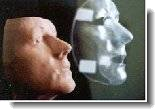
The burn mask is vacuum-formed from the mold, and holes are placed at the region of the eyes, nose, and mouth to allow the patient to breathe and talk. It is secured with straps and worn by the patient for up to 23 hours a day, or as prescribed otherwise by the physician or therapist. A mask will generally last 9-12 months for an adult, and the patient can sometimes require 2 masks over a 2-year period.
Total Contact, Inc. makes custom burn masks using rapid, high resolution, non-contact surface scanning and rapid prototyping systems. This business is the only company in the country making masks using these combined technologies.
The patient is scanned in approximately 7 seconds, collecting accurate three-dimensional surface data of their facial contours. This image is then used to create a mold that duplicates the patient’s face. If scars are present on the patient’s facial scan, which is often the case, we eliminate and smooth these electronically. This is performed so that the mold is a goal representation of their face, and the scars will flatten as the mask shapes the facial surface.
The method of making masks using our technologies has been demonstrated to create better-fitting, more effective burn masks. Only the Total Contact burn mask fits the entire face including around the ears and neck.
The patient is scanned in approximately 7 seconds, collecting accurate three-dimensional surface data of their facial contours. This image is then used to create a mold that duplicates the patient’s face. If scars are present on the patient’s facial scan, which is often the case, we eliminate and smooth these electronically. This is performed so that the mold is a goal representation of their face, and the scars will flatten as the mask shapes the facial surface.
The method of making masks using our technologies has been demonstrated to create better-fitting, more effective burn masks. Only the Total Contact burn mask fits the entire face including around the ears and neck.

Old Method
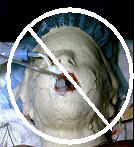
Before Total Contact patients were forced to undergo a messy and claustrophobic procedure to make an impression of the face.
Technicians would apply plaster while the patient, breathing through straws in the nostrils, remained motionless for up to an hour. Children and infants required full anesthesia to make a mold.
After the trauma, mess and expense, masks often fit poorly. Gravity and weight of plaster distort the face and anesthesia tubes keep the mouth full open. Only a highly skilled artisan could make a mask with adequate fit.
Technicians would apply plaster while the patient, breathing through straws in the nostrils, remained motionless for up to an hour. Children and infants required full anesthesia to make a mold.
After the trauma, mess and expense, masks often fit poorly. Gravity and weight of plaster distort the face and anesthesia tubes keep the mouth full open. Only a highly skilled artisan could make a mask with adequate fit.
Download required patient forms to begin process. In addition we will need a prescription and a letter of medical necessity.